
Standing in front of the eye care aisle at your local pharmacy can feel overwhelming. Dozens of artificial tear products line the shelves, each claiming to relieve dry eyes.
But here’s something many people don’t realize: not all dry eye drops work the same way. Your eyes might need oil-based drops, while your friend’s eyes require a completely different formulation.
Understanding which type of dry eye you have makes all the difference in finding effective relief. Keep reading to learn how to match the best eye drops for dry eye to your specific needs and when it’s time to see an ophthalmologist for further treatment.
What Are the Two Main Types of Dry Eye?

Your tear film has three distinct layers (water, oil, and mucus) that work together to keep your eyes comfortable and your vision clear. When one of these layers isn’t functioning properly, you can develop dry eye symptoms.
Most people with dry eye have evaporative dry eye, which happens when the oily layer of your tear film is deficient. The Meibomian glands in your eyelids produce this oil layer, and when these glands become blocked or dysfunctional, your tears can evaporate too quickly.
The second type is aqueous-deficient dry eye, where your body doesn’t produce enough tears. This condition often occurs with autoimmune diseases such as Sjogren’s syndrome. Some people have mixed dry eye, experiencing both evaporative dry eye and insufficient tear production.
Knowing your specific type matters because each responds better to different ingredients and formulations. The ophthalmologists at Batra Vision Medical Group use advanced diagnostic tools like TearLab to determine exactly which type of dry eye you have, allowing them to recommend the most effective treatment approach for your situation.
Choosing Eye Drops for Evaporative Dry Eye
If you have evaporative dry eye, the most common form of the condition, you’ll want to look for lubricating drops with lipid-based or oil-based ingredients. These formulations work by adding oil to your tear film, slowing evaporation, and keeping your eyes comfortable for longer.
When shopping for drops, check the ingredient list for any “oil” mentioned on the label. Some products specifically state “for evaporative dry eye” on their packaging, making them easier to identify. These drops tend to be slightly thicker than water-based formulations, which helps them coat your eye surface and create a protective barrier against rapid tear evaporation.
The thickness that makes these drops effective can also cause temporary blurriness after application. This is completely normal and usually clears within a few minutes.
Choosing Eye Drops for Aqueous-Deficient Dry Eye
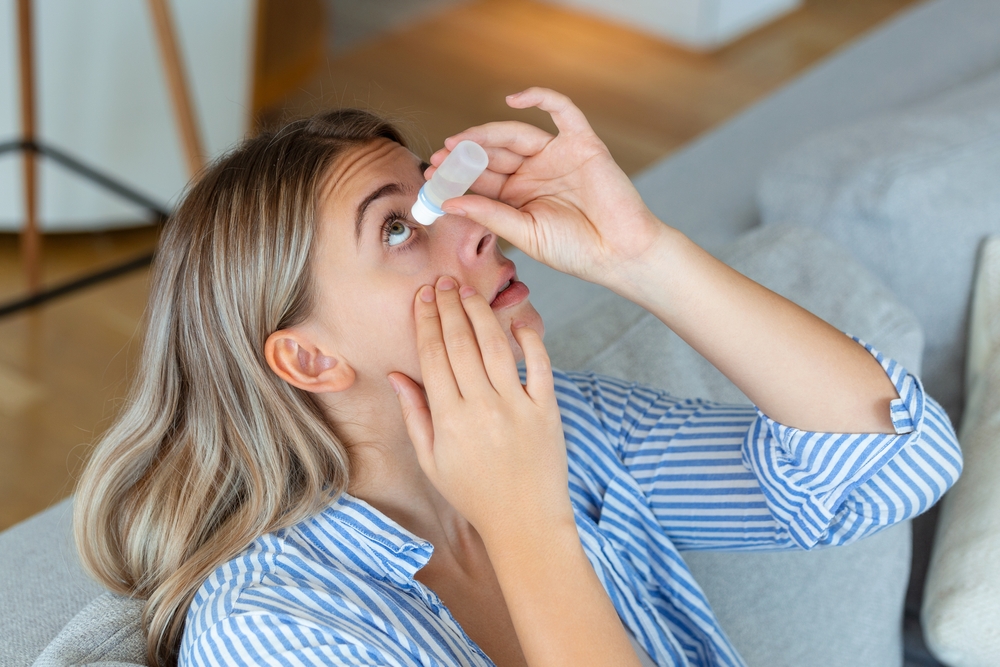
Aqueous-deficient dry eye requires a different approach. For this type, you’ll want drops labeled as “hypotonic” or “hypoosmolar” on the packaging. These terms indicate that the drops are formulated to increase your tear volume by adding water-based moisture to your eye’s surface.
These drops typically feel lighter and thinner than oil-based products. They work by rewetting your ocular surface and diluting the saltiness that often develops when you don’t produce enough natural tears. People with Sjogren’s syndrome or other autoimmune conditions that affect tear production often find these formulations particularly helpful.
Many cases of dry eye involve mixed causes, so using a drop formulated for one type when you actually have the other isn’t necessarily wrong. Both types of lubricants are generally soothing and may provide some relief. The key is finding what works best for your specific symptoms through trial and professional guidance.
Special Considerations for Eye Drop Selection
Beyond the basic formulation type, several factors affect which eye drops work best for your situation.
Preservative-Free vs. Preserved Drops
Eye drop preservatives extend shelf life and prevent bacterial contamination in multi-dose bottles. If you’re only using lubricating drops occasionally (a few times per week), preserved drops are perfectly safe and usually cost less than preservative-free options.
However, if you find yourself reaching for artificial tears more than four times daily over an extended period, you should switch to preservative-free formulations. Frequent exposure to preservatives can irritate your eyes and actually worsen dry eye symptoms over time.
At this frequency of use, you should also schedule an appointment with your ophthalmologist to pursue professional treatment options rather than just managing them with over-the-counter products.
Gels and Ointments
Gel-based drops and ointments provide options when regular liquid drops don’t last long enough. Gels are thicker than standard liquid drops but not as thick as ointments. They stay on your eye surface longer, providing extended relief.
Ointments are the thickest, most concentrated option and come in tubes rather than bottles. Both gels and ointments cause more noticeable and longer-lasting blur than liquid drops, so most eye doctors recommend using them at bedtime. You can relax or sleep while the medication works without worrying about vision clarity.
Contact Lens Considerations
If you wear contact lenses, you must choose preservative-free drops that specifically state “safe for contact lens wear” on the packaging. You can apply these drops while wearing your lenses. For all other eye drops, remove your contacts first, wait five minutes, apply the drops, then wait another 10 to 15 minutes before reinserting your lenses.
What Eye Drops to Avoid
Some eye drops can actually make your problems worse. Be very careful with products marketed for “red eye relief.”
These drops often contain vasoconstrictors (ingredients that temporarily shrink blood vessels to reduce redness). While they make your eyes look whiter initially, they can cause rebound redness and worsen symptoms with regular use.
Specific ingredients to avoid include tetrahydrozoline and naphazoline. Some drops containing brimonidine may be safer alternatives for occasional redness, but the long-term effects aren’t well understood. Rather than treating redness yourself, see your eye doctor to determine what’s causing your red eyes in the first place.
When to See an Ophthalmologist

If you’re using over-the-counter lubricating drops more than two or three times per day, it’s time to schedule a comprehensive eye examination. Lubricants provide temporary symptom relief for almost every type of ocular surface disease, but they don’t treat the underlying condition causing your discomfort.
An ophthalmologist can pinpoint your specific dry eye subtype and prescribe therapies that address the root cause rather than mask symptoms. The team at Batra Vision Medical Group uses advanced diagnostic testing to create personalized treatment plans that may include prescription medications, in-office procedures, or specific combinations of treatments tailored to your needs.
If you’re struggling with persistent dry eye symptoms or feel unsure which products are right for you, schedule a comprehensive dry eye evaluation at Batra Vision Medical Group in San Leandro, CA, today!
 Follow Us!